【Toyokawa Inari】A Sacred Site of Prosperity Protected by a Fox-Riding Deity
- PREFECTURE
- AICHI
- INTEREST
- HISTORY
Often depicted riding a white fox and holding rice sheaves, Dakiniten has long been worshipped as a guardian of abundant harvests and business success. Toyokawa Inari is considered one of Japan’s three great Inari sites and has attracted devotion for centuries.
Founded during the Muromachi period, the temple is said to have been visited by famous warlords such as Oda Nobunaga, Toyotomi Hideyoshi, and Tokugawa Ieyasu. During the Edo period, its popularity spread widely among the general public.
Amulet Office & Temple Office: 9:00 AM – 5:00 PM
Note: Information is current at the time of publication. Please check the official website for the latest updates.
CONTENT
The Main Hall and Temple Complex—Where a Thousand Years of Prayer Reside

Within the vast grounds of Toyokawa Inari (Myogonji Temple), around 90 temple buildings stand in harmony, preserving a long history of faith and tradition.
As you walk along the approach, the first structure you encounter is the “Sōmon” (main gate), rebuilt in 1884, which serves as the grand entrance welcoming visitors. Continuing onward, you will find the “Sanmon” (temple gate), built in 1536 through a donation by Imagawa Yoshimoto. It is the oldest existing structure in the complex, and its solid roof and intricate wooden framework quietly tell the story of its long history.
At the center of the grounds stands the “Hattō” (main hall), which has long served as the focal point of worship. Originally reconstructed during the Tenpō era, it was rebuilt again in 2024 due to aging, now blending traditional design with modern construction techniques. The “Daihonden” (main sanctuary), completed in 1930, is a grand irimoya-style building and a symbol of Toyokawa Inari faith. Inside enshrines Toyokawa Dakini Shinten, drawing countless visitors who come to pray for prosperity in business and good fortune.
Other notable buildings include the “Saishōden,” constructed entirely of Japanese cypress and spanning 400 tatami mats, and the “Shōrōdō” (bell tower), built from zelkova wood. The harmonious fusion of architectural beauty and sacred space leaves a lasting impression, helping visitors understand why Toyokawa Inari is known as one of Japan’s three great Inari shrines.
Reikozuka—A Sacred Place of Wishes and Gratitude
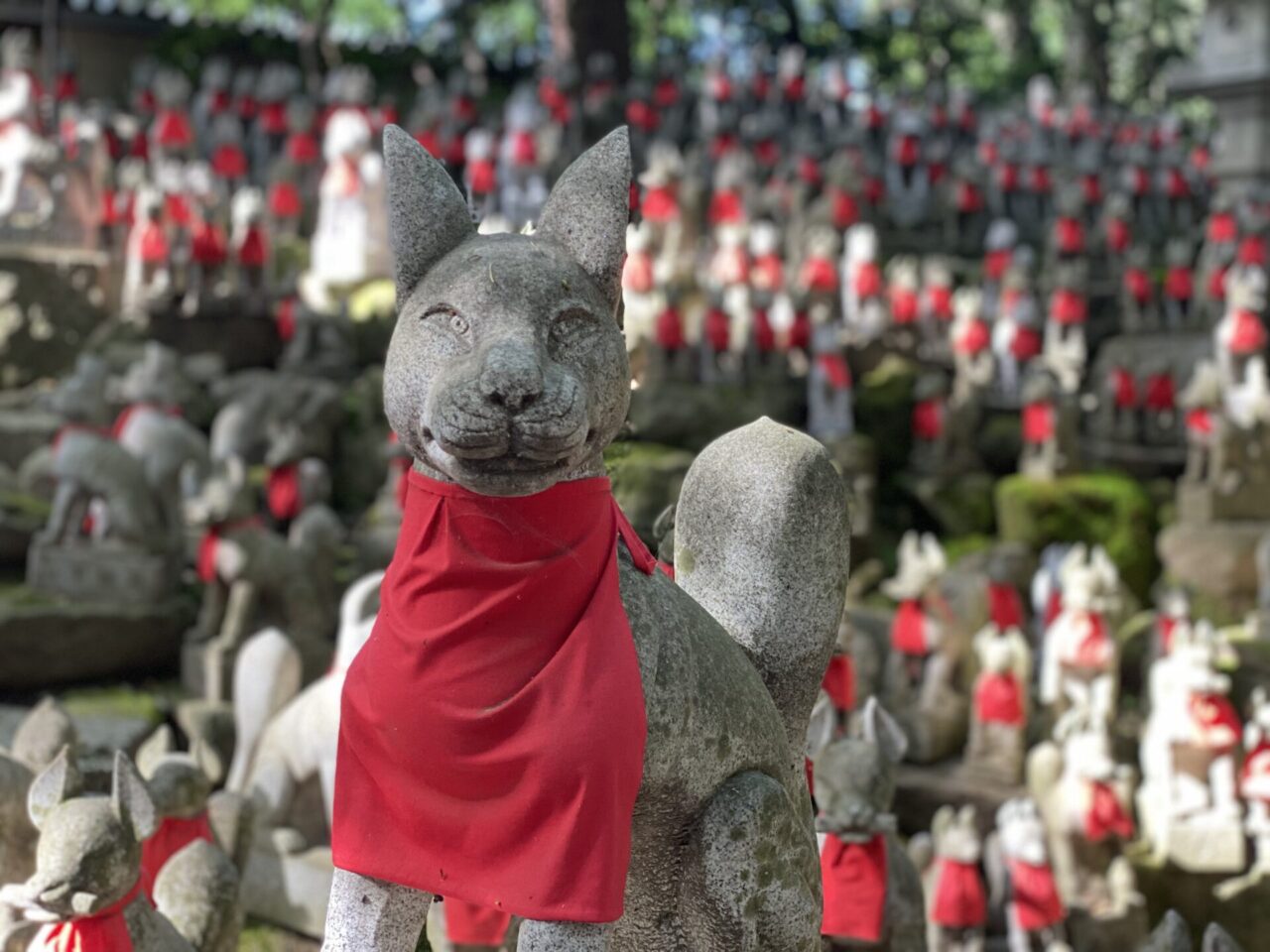
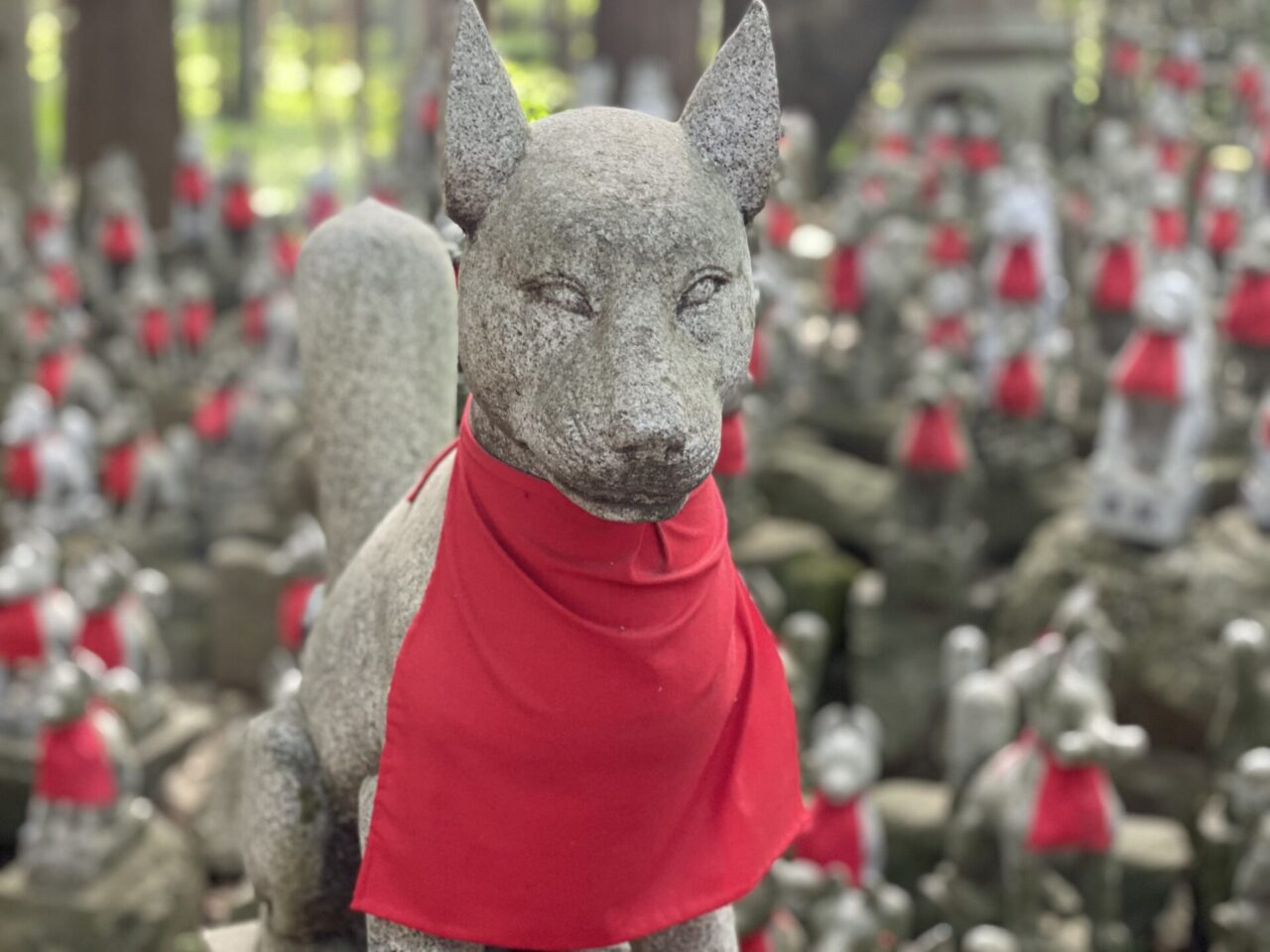

One of the most striking sights within the grounds is the “Reikozuka,” or Fox Mound.
Located behind the main sanctuary, this area enshrines over a thousand fox statues, creating a truly breathtaking scene. These statues were dedicated by worshippers in gratitude for answered prayers such as business success and family safety. Lined up neatly, many wearing red bibs, the foxes exude a mysterious and powerful atmosphere. In Inari belief, foxes are regarded as messengers of the gods, and visitors quietly offer their prayers and gratitude before them.
Beyond the Reikozuka, there are many other highlights throughout the grounds. Around the main sanctuary, a pathway lined with vermilion torii gates creates a solemn and spiritually uplifting experience as you walk through them.
The gardens, harmonizing with the seasons, are another highlight. Cherry blossoms in spring, lush greenery in summer, vibrant autumn foliage, and the crisp beauty of winter all offer unique scenery throughout the year.
Along the approach, souvenir shops and eateries line the path, where visitors can enjoy local specialties such as inari sushi and inari manju. The lively atmosphere of the temple town adds another layer of enjoyment to the visit.
The solemnity of Reikozuka combined with the diverse attractions of the grounds makes Toyokawa Inari more than just a place of worship. It is a space where prayer, liveliness, nature, and history come together, offering visitors an unforgettable experience.
From New Year Visits to Lantern Festivals—Events That Connect People Throughout the Year

At Toyokawa Inari (Myogonji Temple), a variety of seasonal events are held throughout the year, deeply rooted in tradition and faith.
The year begins with Hatsumode (New Year’s visit), held from January 1 to 15, when worshippers from across Japan gather to pray for peace and good fortune. This is followed by the Hatsuuma Festival (held on the first “horse day” of the second lunar month), which reflects the origins of Inari worship.

In spring, the Grand Spring Festival (May 4–5) celebrates prayers for a bountiful harvest. The grounds come alive with mikoshi processions, children’s parades, traditional lotteries, antique markets, and lively open-air stalls. In summer, the Mitama Festival (August 7–8) serves as a memorial event for the war dead, featuring Bon dances that create a solemn yet communal atmosphere. In autumn, the Grand Autumn Festival (held on the third weekend of November) transforms the temple into a magical scene illuminated by countless lanterns, known as the “Great Lantern Festival.” The sight of floats and mikoshi lit by soft evening light leaves a powerful impression on visitors.
In addition, the monthly festival (held on the 22nd) offers antique markets and a lively temple-town atmosphere, making it a popular and accessible day for casual visits.
Throughout the year, Toyokawa Inari serves not only as a sacred site of faith but also as a place that connects people through vibrant traditions and events.
A Calligraphy Seal That Captures Your Prayer—Goshuin at Toyokawa Inari
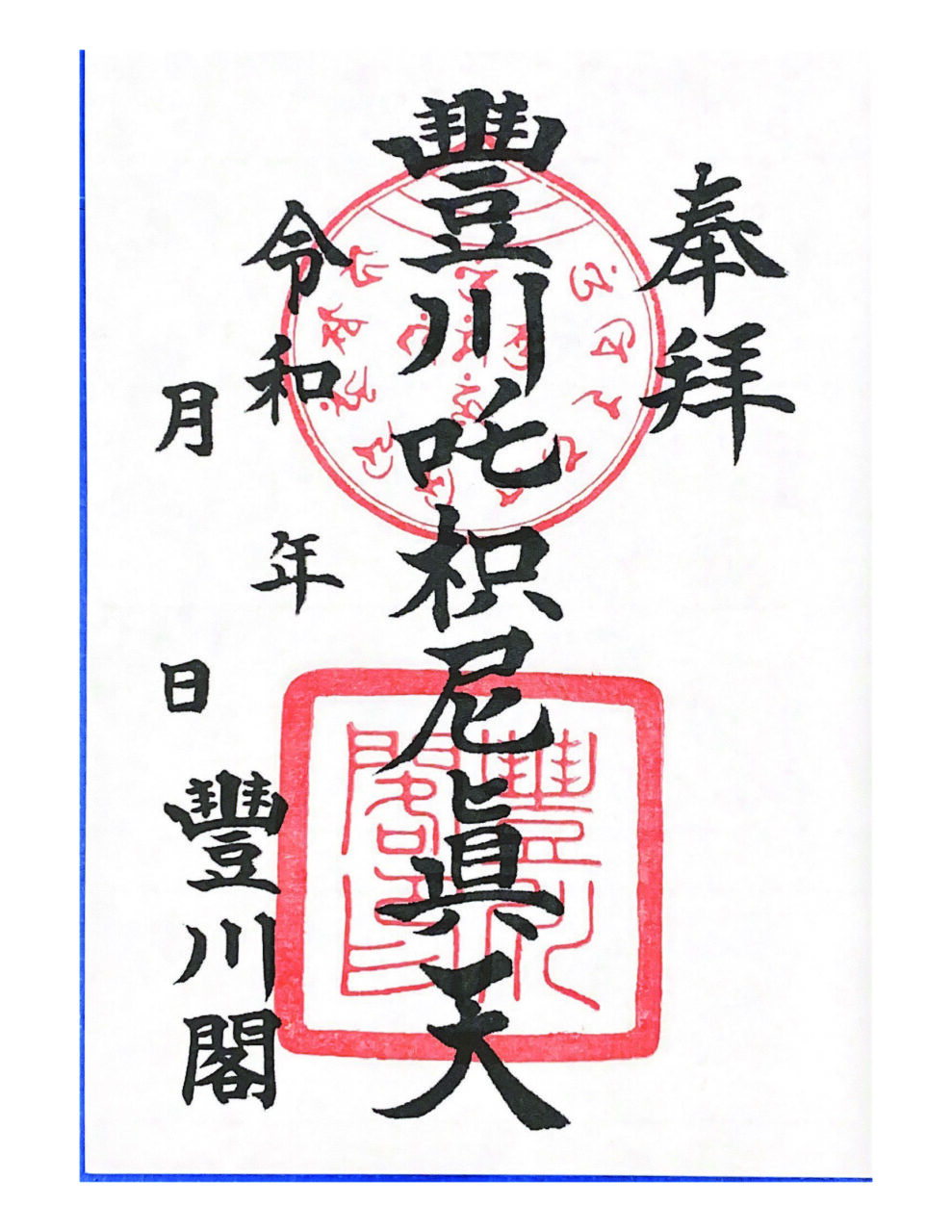
A popular memento of visiting Toyokawa Inari (Myogonji Temple) is the goshuin, a sacred calligraphy seal cherished by many worshippers.
Available at the reception office near the main hall, these seals are also accompanied by dedicated goshuin books. The bold brushstrokes and red stamps are not only souvenirs but meaningful records of prayer that resonate deeply with visitors.
There are multiple types of goshuin available, each associated with different deities and Buddhist figures. These include Toyokawa Dakini Shinten, often depicted riding a white fox and holding rice; Senju Kannon, the thousand-armed bodhisattva; Fudo Myoo, who dispels evil and confusion; and Yakushi Nyorai, who grants health and longevity. Each carries its own spiritual significance, allowing visitors to choose according to their wishes.
Limited-edition goshuin are sometimes offered during special seasons and events, attracting many visitors seeking these rare items.
In addition to goshuin, the temple offers a variety of charms, talismans, and lucky items. Whether for business success, family safety, or traffic safety, visitors can select items that match their personal wishes. These items, chosen while walking through the grounds, become meaningful companions in daily life.
In this way, goshuin and sacred items allow visitors to carry the spirit of Toyokawa Inari with them. More than just souvenirs, they represent a lasting connection between worshippers and the divine, which continues to draw people back again and again.
AICHI
-
![【SHITARA VILLAGE】A Resort Stay Immersed in the Nature of Southern Nagano and Oku-Mikawa]()
【SHITARA VILLAGE】A Resort Stay Immersed in the Nature of Southern Nagano and Oku-Mikawa
-
![【Non Hoi Park】 A Comprehensive Botanical and Zoological Park Where You Can Feel Close to Living Creatures and Nature]()
【Non Hoi Park】 A Comprehensive Botanical and Zoological Park Where You Can Feel Close to Living Creatures and Nature
-
![【Toyokawa Inari】A Sacred Site of Prosperity Protected by a Fox-Riding Deity]()
【Toyokawa Inari】A Sacred Site of Prosperity Protected by a Fox-Riding Deity
-
![【Laguna Ten Bosch】 Enjoy playing, eating, and shopping at this large-scale resort overlooking Mikawa Bay!]()
【Laguna Ten Bosch】 Enjoy playing, eating, and shopping at this large-scale resort overlooking Mikawa Bay!
-
![【Takeshima Aquarium】 Japan’s No. 1 in Species Variety! A Deep Dive into Rare Deep-Sea Creatures]()
【Takeshima Aquarium】 Japan’s No. 1 in Species Variety! A Deep Dive into Rare Deep-Sea Creatures
-
![【Sakushima】A Charming Island of Healing and Art Floating in Mikawa Bay]()
【Sakushima】A Charming Island of Healing and Art Floating in Mikawa Bay



history
-
![【Non Hoi Park】 A Comprehensive Botanical and Zoological Park Where You Can Feel Close to Living Creatures and Nature]()
【Non Hoi Park】 A Comprehensive Botanical and Zoological Park Where You Can Feel Close to Living Creatures and Nature
-
![【Asuke (Korankei)】 A Town of History, Tradition, and Nostalgia]()
【Asuke (Korankei)】 A Town of History, Tradition, and Nostalgia
-
![【Toyota Commemorative Museum of Industry and Technology】 Experience the Evolution of Toyota Group’s Technology]()
【Toyota Commemorative Museum of Industry and Technology】 Experience the Evolution of Toyota Group’s Technology
-
![【Aichi Asahi Archaeological Museum】 See, Touch, and Experience the World of the Yayoi Period]()
【Aichi Asahi Archaeological Museum】 See, Touch, and Experience the World of the Yayoi Period
-
![【Atsuta Jingu (Atsuta Shrine)】It receives about 6.5 million visitors annually! A highly respected shrine since ancient times]()
【Atsuta Jingu (Atsuta Shrine)】It receives about 6.5 million visitors annually! A highly respected shrine since ancient times
-
![Hikari Museum: A Unique Space Blending Art and History]()
Hikari Museum: A Unique Space Blending Art and History