
【Iwamura Castle Ruins & Castle Town】A Journey Through Samurai History and Everyday Life
- PREFECTURE
- GIFU
Built at an elevation of 717 meters, Iwamura Castle is counted among Japan’s three greatest mountaintop castles. Its dramatic stone walls and sweeping views from the ruins leave a powerful impression on visitors. The castle is also known for having been ruled by a rare female lord, Lady Otsuya, during the Sengoku period—adding depth and intrigue to its history.
As you ascend the mountain paths, the remains of the castle gradually reveal themselves, offering a unique experience that invites you to imagine the strategies and daily life of the past.
Lady Otsuya, the Noble Female Lord Who Survived the Warring States Period

When speaking of Iwamura Castle, one cannot overlook Lady Otsuya, known as one of the very few female castle lords in Japan during the Warring States period.
Lady Otsuya, an aunt of Oda Nobunaga, assumed responsibility for the castle after the death of her husband, Tōyama Kagetō, together with Gobōmaru, Nobunaga’s fifth son, whom they had taken in as their heir. At a time when it was extraordinarily rare for a woman to rule a castle, she is said to have earned deep respect and support from the people through her intelligence and strong character.
However, as the Takeda clan expanded its power, Iwamura Castle became the stage for fierce conflict. In order to protect both the castle and the lives of the people under her care, Lady Otsuya chose to make peace with the Takeda side, and was eventually taken in as the wife of Akiyama Torashige. Later, when the Oda forces recaptured Iwamura Castle, her former loyalty was regarded as betrayal, and she met a tragic end.
The life of Lady Otsuya conveys to the present day a vision of feminine strength that risked everything not for power or family prestige, but to protect the land and its people. Around Iwamura, visitors can still find sites said to be connected to the female lord, including her grave and memorial monuments, allowing them to trace her footsteps.
The story of Iwamura, where one encounters the quiet yet unshakable strength of a woman whose name was etched into history, continues to leave a deep impression on all who visit.
Memories of the Warring States Etched in Stone: The Ruins of Iwamura Castle, One of Japan’s Three Great Mountain Castles

Iwamura Castle, built at an elevation of 717 meters, is counted among Japan’s three great mountain castles. It was originally constructed by the Tōyama clan in the late Kamakura period, and flourished as a strategic stronghold from the Warring States period through the early Edo period.

Although the castle buildings themselves no longer remain, the extensive stone walls, baileys, and mountain approach routes have been well preserved, allowing visitors to sense the former grandeur of the fortress.


The greatest feature of Iwamura Castle lies in its ingenious use of the mountain’s natural terrain. Its defensive design takes advantage of valleys and ridges, with continuous stone walls and multiple baileys arranged in tiers, clearly reflecting the military thinking of the Warring States era. In particular, the famous stone walls known as the “Six-Tiered Walls” leave an overwhelming impression on visitors and stand as one of the site’s most iconic highlights.


The ruins of Iwamura Castle have also been selected as one of Japan’s Top 100 Castles. By walking the mountain paths developed as castle approach routes, visitors can experience both nature and history at once. The panoramic view from the summit is truly spectacular, inviting one to imagine the scenery once seen by the castle’s former lords.
A Townscape Alive with History: A Castle Town That Still Preserves the Atmosphere of Edo

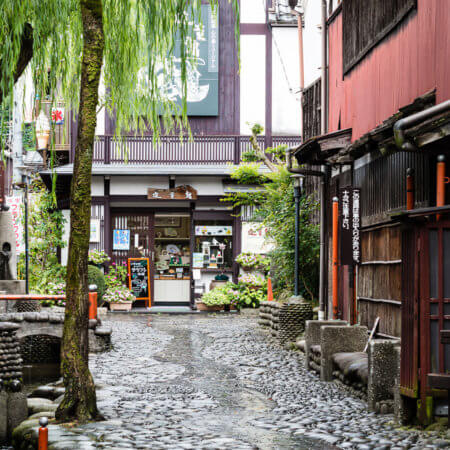
Spreading out at the foot of Iwamura Castle, the old castle town of Iwamura is a precious townscape that still strongly retains the character of the Edo period. Developed alongside improvements to the castle, this area is lined with merchant houses and the homes of artisans who supported the daily life of the town, preserving the atmosphere of those times even today.

In 1998, this townscape was designated an Important Preservation District for Groups of Traditional Buildings. Along its streets, visitors can see traditional architectural features such as lattice windows, namako walls, and projecting wooden latticework. The carefully crafted details reveal an accumulation of culture and craftsmanship built over generations. The entire town feels like an open-air historical museum, where simply walking through it creates the sensation of stepping back into the Edo period.


Another part of Iwamura’s charm lies in the preservation efforts carried out by local residents and the well-developed visitor guidance available throughout the area. Cafés and galleries making use of renovated vacant houses are scattered across the town, creating a harmonious blend with new cultural expressions. Events and seasonal activities that make use of the historic streetscape are also held here, allowing visitors to feel how tradition continues to live on in the present.
With its beautifully preserved buildings coexisting alongside everyday life, the castle town of Iwamura is a place that might well be called one of Japan’s original landscapes.
Explore on Foot and Encounter the Stories Held in the Town’s Memory

Iwamura Castle Town is home to many distinctive attractions that are far more than simply an old streetscape. Each site plays a role in preserving and conveying the region’s history, culture, and way of life, adding even greater depth to the pleasure of strolling through the town.

One of the best examples is the Iwamura History Museum. In addition to materials related to Iwamura Castle, it offers rich displays on the origins of the castle town and the culture of merchant life, making it an excellent place to visit before or after exploring the area on foot. The Kimura Residence and Tosaya are also notable sites—former merchant houses from the Edo period that have been preserved and repurposed while retaining their original character. Their thick beams, earthen floors, and inner courtyards have been beautifully maintained, making them well worth a visit for their architectural beauty alone.

In addition, Iwamura Brewery, with more than 230 years of history as a sake brewer, offers visitors the chance to tour the brewery and purchase locally made sake. Its signature label, named after the female castle lord, is one of Iwamura’s most celebrated specialties. Long-established confectionery shops in the castle town also offer seasonal fresh sweets and rustic local treats, making them perfect stops when looking for souvenirs.
Note: Information is current at the time of publication. Please check the official website for the latest updates.
GIFU
-
![Hikari Museum: A Unique Space Blending Art and History]()
Hikari Museum: A Unique Space Blending Art and History
-
![The Headquarters of National Unification Surrounded by Nature【Gifu Castle】]()
The Headquarters of National Unification Surrounded by Nature【Gifu Castle】
-
![【Gujo Hachiman】A castle town known as the “Little Kyoto of Oku-Mino” with clear streams and famous spring water]()
【Gujo Hachiman】A castle town known as the “Little Kyoto of Oku-Mino” with clear streams and famous spring water
-
![【Bokka no Sato】 A Relaxing Theme Park with Seasonal Flowers and Adorable Animals]()
【Bokka no Sato】 A Relaxing Theme Park with Seasonal Flowers and Adorable Animals
-
![【Takasu Snow Park】One of the largest ski resorts in Western Japan, famous for its vast slopes and diverse courses]()
【Takasu Snow Park】One of the largest ski resorts in Western Japan, famous for its vast slopes and diverse courses
-
![【Shirakawa-go】The Charm of Japan’s Hidden Gem]()
【Shirakawa-go】The Charm of Japan’s Hidden Gem




history
-
![【Togakushi Shrine 】A Sacred Pilgrimage Through Myth and Majestic Cedar Forests]()
【Togakushi Shrine 】A Sacred Pilgrimage Through Myth and Majestic Cedar Forests
-
![【Non Hoi Park】 A Comprehensive Botanical and Zoological Park Where You Can Feel Close to Living Creatures and Nature]()
【Non Hoi Park】 A Comprehensive Botanical and Zoological Park Where You Can Feel Close to Living Creatures and Nature
-
![【Toyokawa Inari】A Sacred Site of Prosperity Protected by a Fox-Riding Deity]()
【Toyokawa Inari】A Sacred Site of Prosperity Protected by a Fox-Riding Deity
-
![【Asuke (Korankei)】 A Town of History, Tradition, and Nostalgia]()
【Asuke (Korankei)】 A Town of History, Tradition, and Nostalgia
-
![【Toyota Commemorative Museum of Industry and Technology】 Experience the Evolution of Toyota Group’s Technology]()
【Toyota Commemorative Museum of Industry and Technology】 Experience the Evolution of Toyota Group’s Technology
-
![【Aichi Asahi Archaeological Museum】 See, Touch, and Experience the World of the Yayoi Period]()
【Aichi Asahi Archaeological Museum】 See, Touch, and Experience the World of the Yayoi Period


nature
-
![【Togakushi Shrine 】A Sacred Pilgrimage Through Myth and Majestic Cedar Forests]()
【Togakushi Shrine 】A Sacred Pilgrimage Through Myth and Majestic Cedar Forests
-
![【Alps BASE】A forest glamping retreat with only four domes, where you can relax under the stars and enjoy views of two alpine ranges]()
【Alps BASE】A forest glamping retreat with only four domes, where you can relax under the stars and enjoy views of two alpine ranges
-
![【Fuji Safari Park】Get Up Close Without Leaving Your Car: A Wild Adventure at the Foot of Mount Fuji]()
【Fuji Safari Park】Get Up Close Without Leaving Your Car: A Wild Adventure at the Foot of Mount Fuji
-
![【Hamamatsu Flower Park】A flower-themed park in Kanzanji where you can spend a full day surrounded by seasonal blooms]()
【Hamamatsu Flower Park】A flower-themed park in Kanzanji where you can spend a full day surrounded by seasonal blooms
-
![【SHITARA VILLAGE】A Resort Stay Immersed in the Nature of Southern Nagano and Oku-Mikawa]()
【SHITARA VILLAGE】A Resort Stay Immersed in the Nature of Southern Nagano and Oku-Mikawa
-
![【Non Hoi Park】 A Comprehensive Botanical and Zoological Park Where You Can Feel Close to Living Creatures and Nature]()
【Non Hoi Park】 A Comprehensive Botanical and Zoological Park Where You Can Feel Close to Living Creatures and Nature


